

Denim Embellishment Techniques: Embroidery, Rhinestones, Patches and Woven Trims
Denim embellishment is not only a styling decision. Embroidery, rhinestones, appliques, patches and woven trims each introduce different construction, placement and approval questions during sample development.
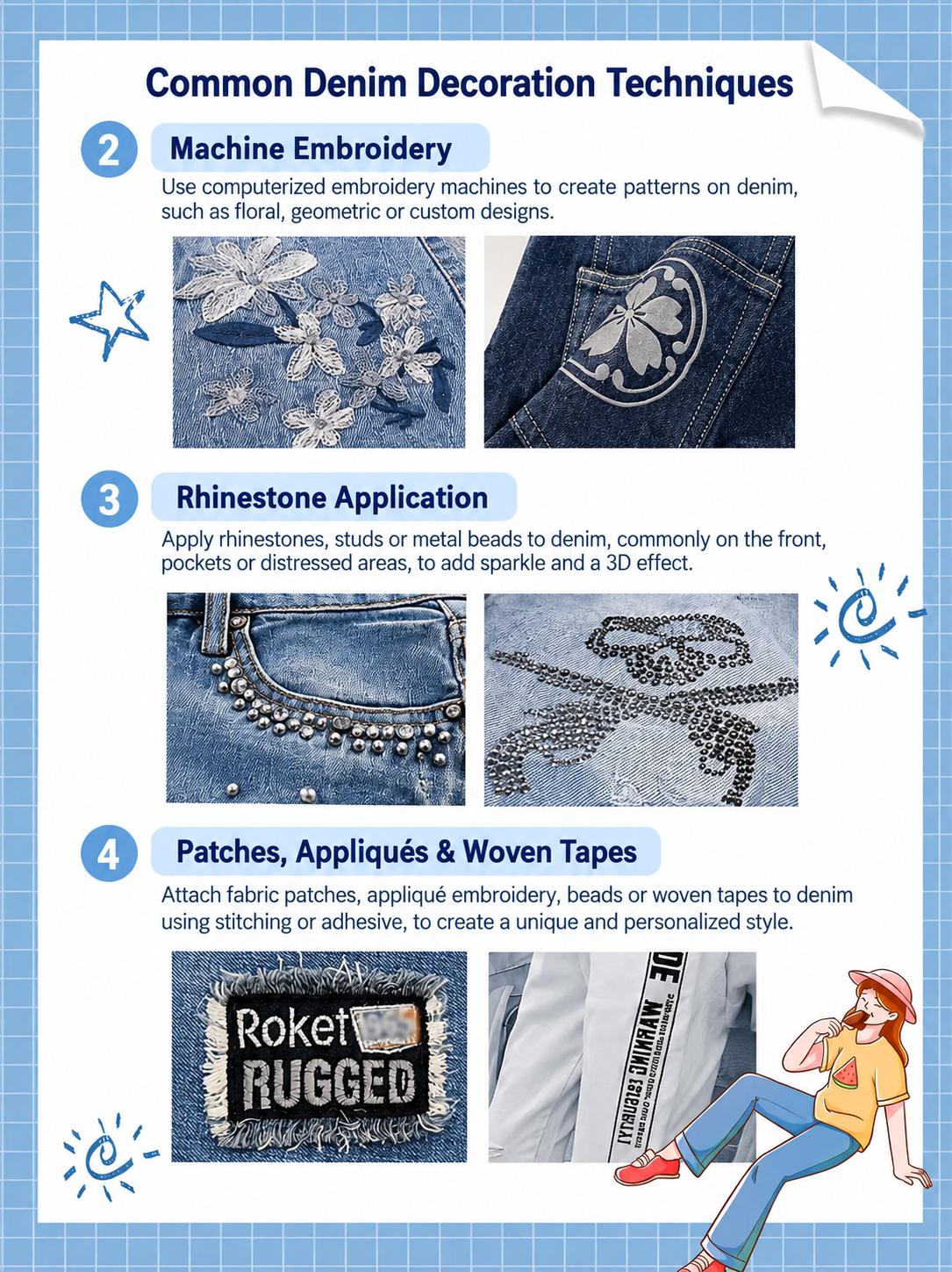
Machine embroidery
Computerized embroidery can translate logos, floral motifs, lettering and custom artwork onto denim. During sampling, review artwork scale, placement, stitch density, backing, edge quality and how the embroidery looks after the intended wash.
Rhinestone and stud application
Rhinestones, studs and decorative beads can add localized texture and shine. The sample should confirm size, spacing, placement and the intended visual balance. Any durability or wash requirement should be stated in the product brief rather than assumed from appearance alone.
Appliques and fabric patches
Applique and fabric patches add another material layer to the garment. The development sample should make the patch shape, position, edge treatment, stitching method and interaction with the denim wash clear.
Woven tapes and decorative trims
Woven tapes can be used along seams, pockets, waist areas or other design lines. Review width, placement, attachment method, colour and how the trim works with the surrounding construction.
Laser-patterned denim: check the construction after the surface effect
What you are seeing: sewing and garment construction on denim after the patterned surface effect has already been created.
Why it matters: a laser or surface effect still has to work with seam placement, construction and the finished garment rather than being approved as artwork alone.
What should be approved: artwork scale and placement, the finished visual effect, seam interaction, wash result and the physical garment sample.
TANTYDENIM’s role: we coordinate the approved effect and construction requirements with the relevant production partners. This clip shows the construction stage, not the laser application itself.
What should a brand approve before bulk production?
- Artwork: final shape, scale and orientation.
- Placement: exact location relative to seams, pockets and garment balance.
- Materials: thread, stones, patches, tape or other decorative components.
- Attachment: stitching, embroidery, heat application or other approved method.
- Wash interaction: how the decoration looks after the intended wash and finishing process.
- Approved sample: retain the approved physical or documented reference before bulk production.
For the broader development route, see Custom Denim Development. For buttons, rivets, labels and other hardware or trim decisions, see Custom Denim Trims, Buttons, Rivets and Labels. For production-process evidence, see From Paper Pattern to Sewing.