

From Paper Pattern to Sewing: Real Garment Production Process Evidence
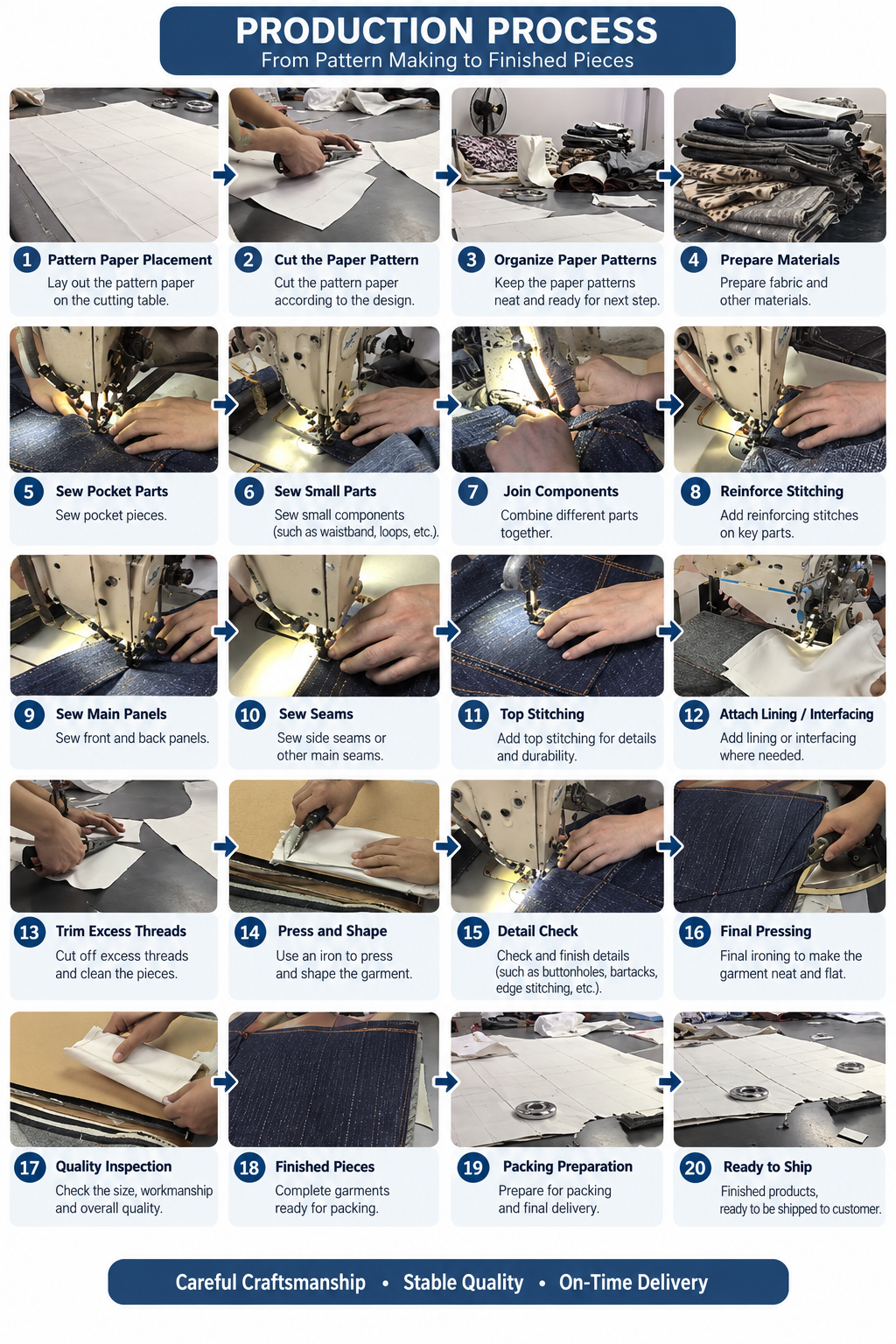
A finished pair of jeans or trousers is the result of many small construction decisions. This production-process evidence shows how pattern preparation, cutting, sewing, reinforcement and finishing are handled as separate steps rather than treated as one generic manufacturing stage.
1. Pattern preparation comes before sewing
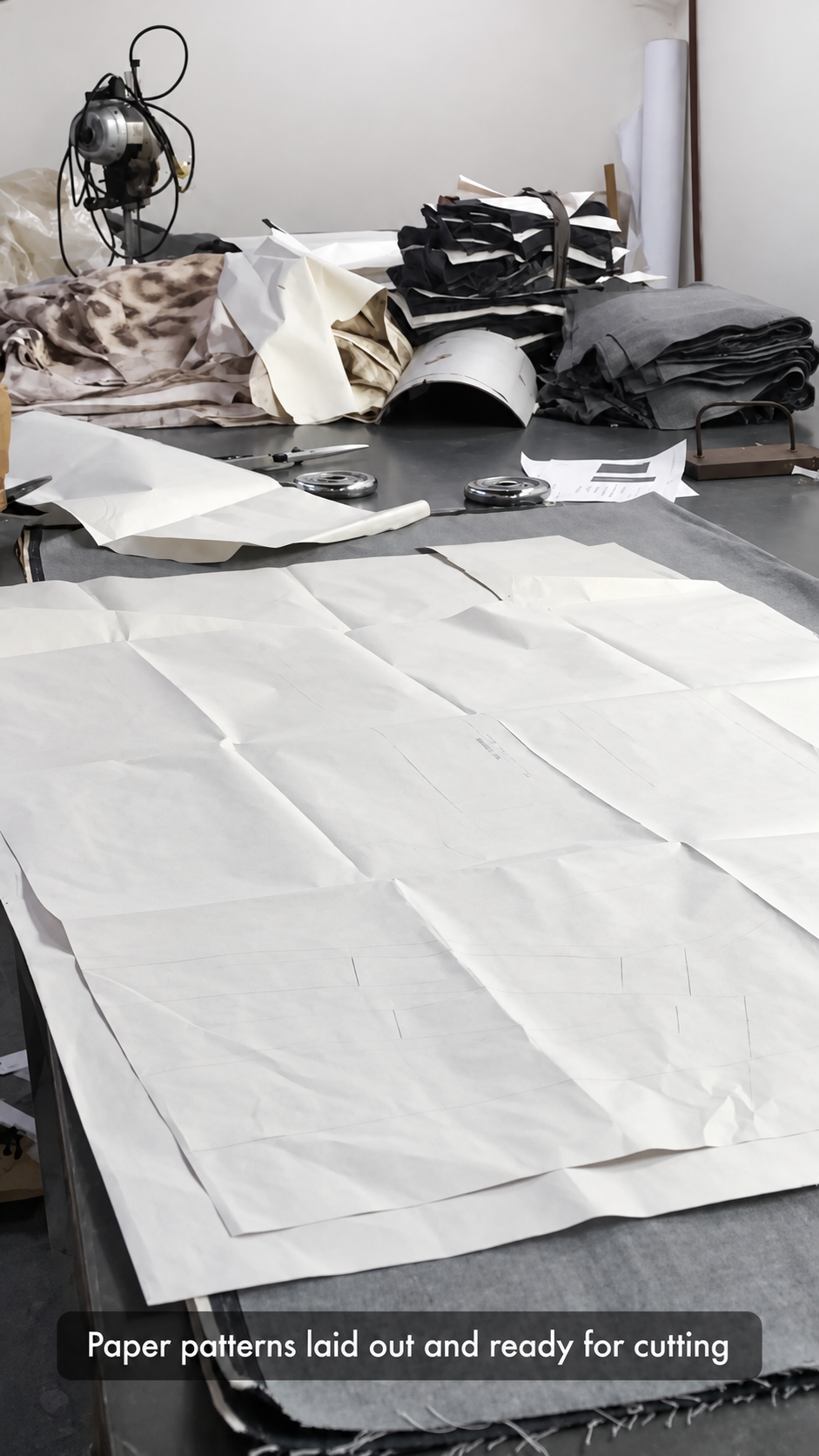
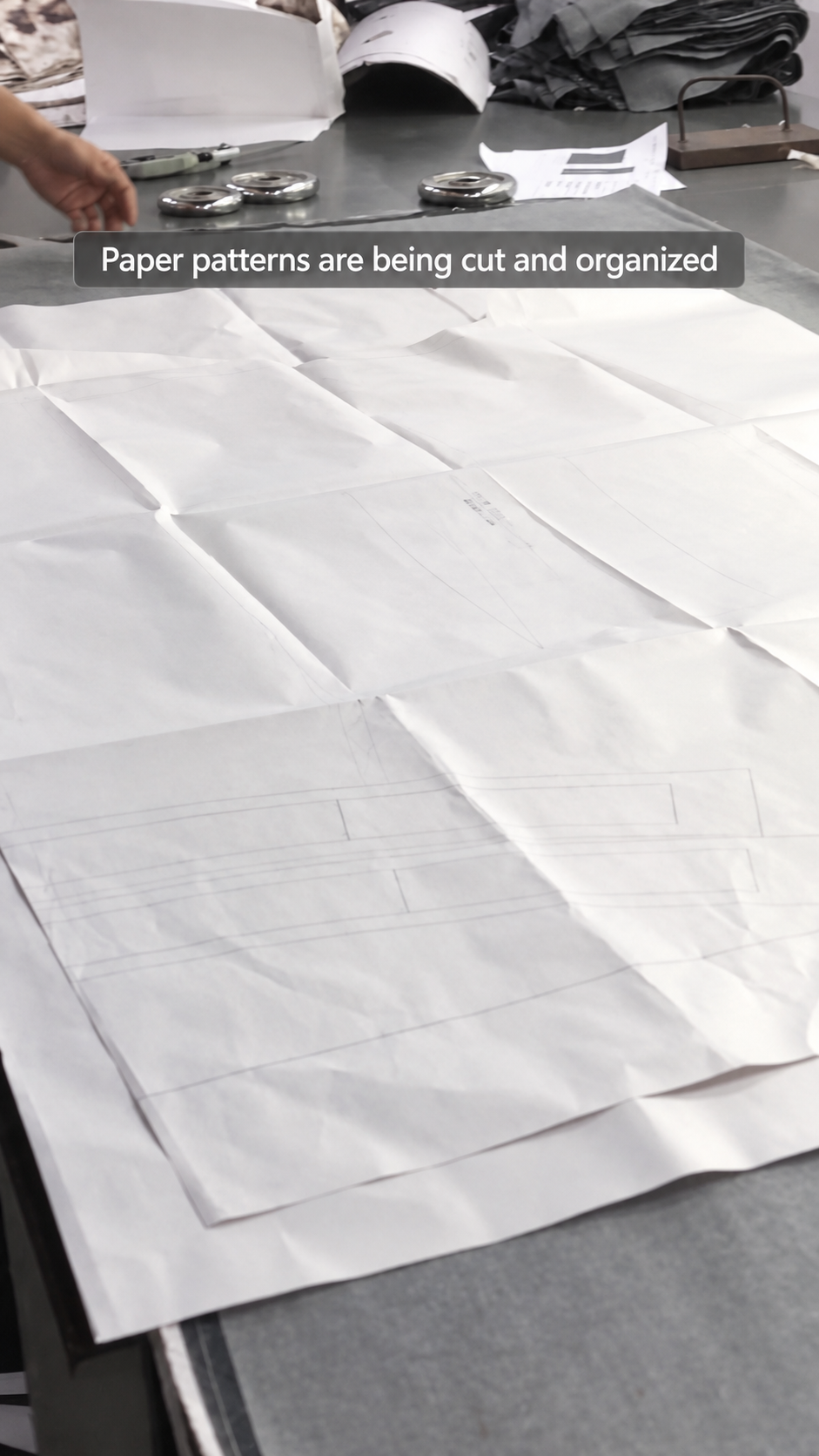
Before fabric components can be assembled, paper patterns need to be prepared, positioned and cut accurately. Pattern work defines the shape and relationship of garment components, so errors at this stage can carry through into fit, pocket placement, seam position and overall proportion.
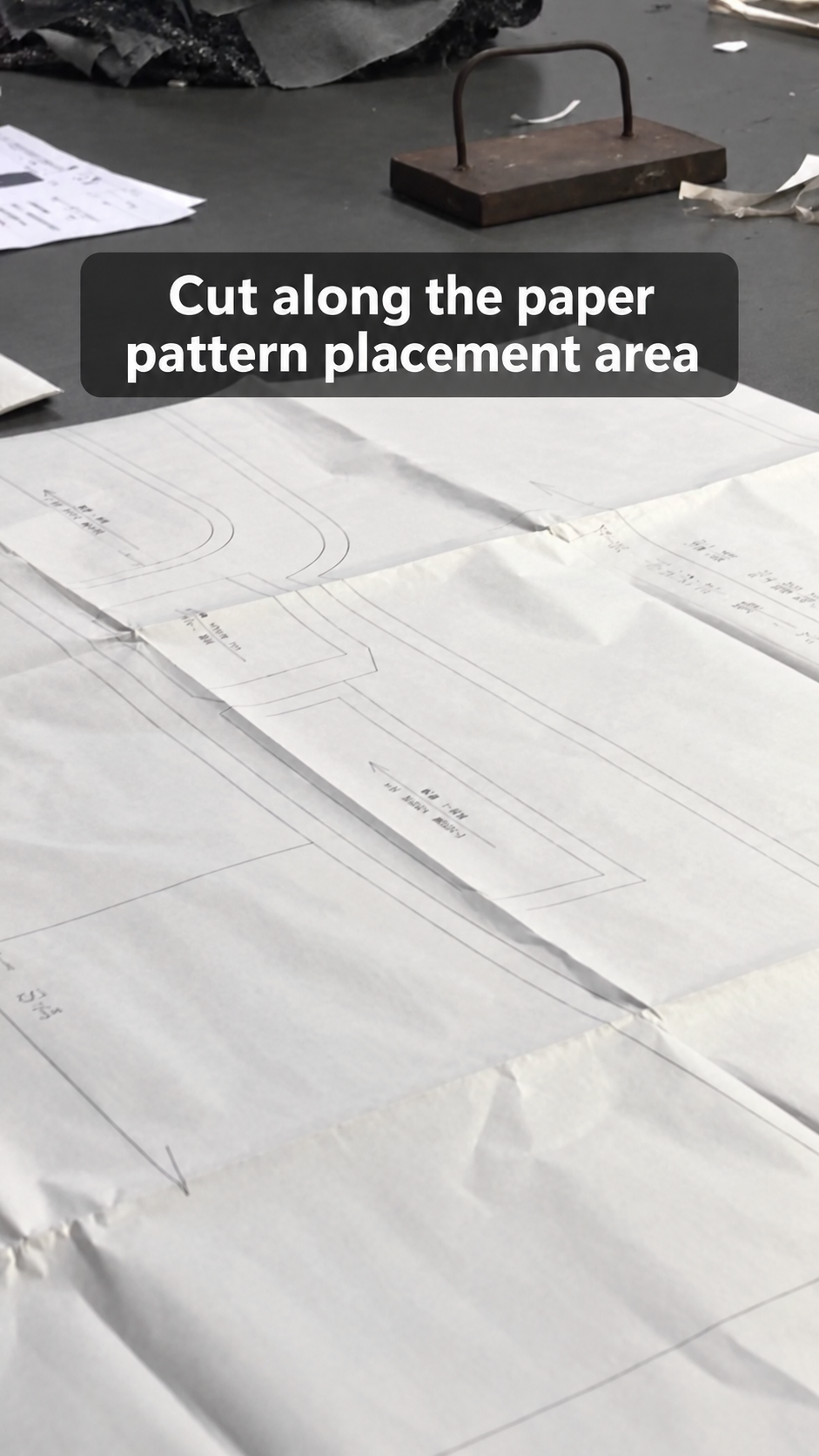
Production-partner process: pattern preparation and cutting
2. Small parts are built before final assembly
Garment construction is not simply a matter of joining front and back panels. Pocket components, waistbands, belt loops, seam reinforcements and other small parts are prepared and sewn in sequence. The order matters because later construction steps depend on the accuracy of the earlier ones.
Production-partner process: sewing and garment construction
This short clip is used as production-process evidence. It shows an actual sewing operation at a partner facility rather than a staged factory image.
3. Reinforcement and finishing details affect durability and appearance
Operations such as bartacking, buttonhole sewing, overlocking, double-needle stitching, pocket attachment and hem finishing are used at different points in the construction sequence. These details help control seam security, edge finish and visual consistency.
For buyers reviewing a development sample, the useful question is not only whether the garment looks correct from a distance, but whether the construction details match the intended specification and remain consistent with the approved sample.
Construction and fit details to check
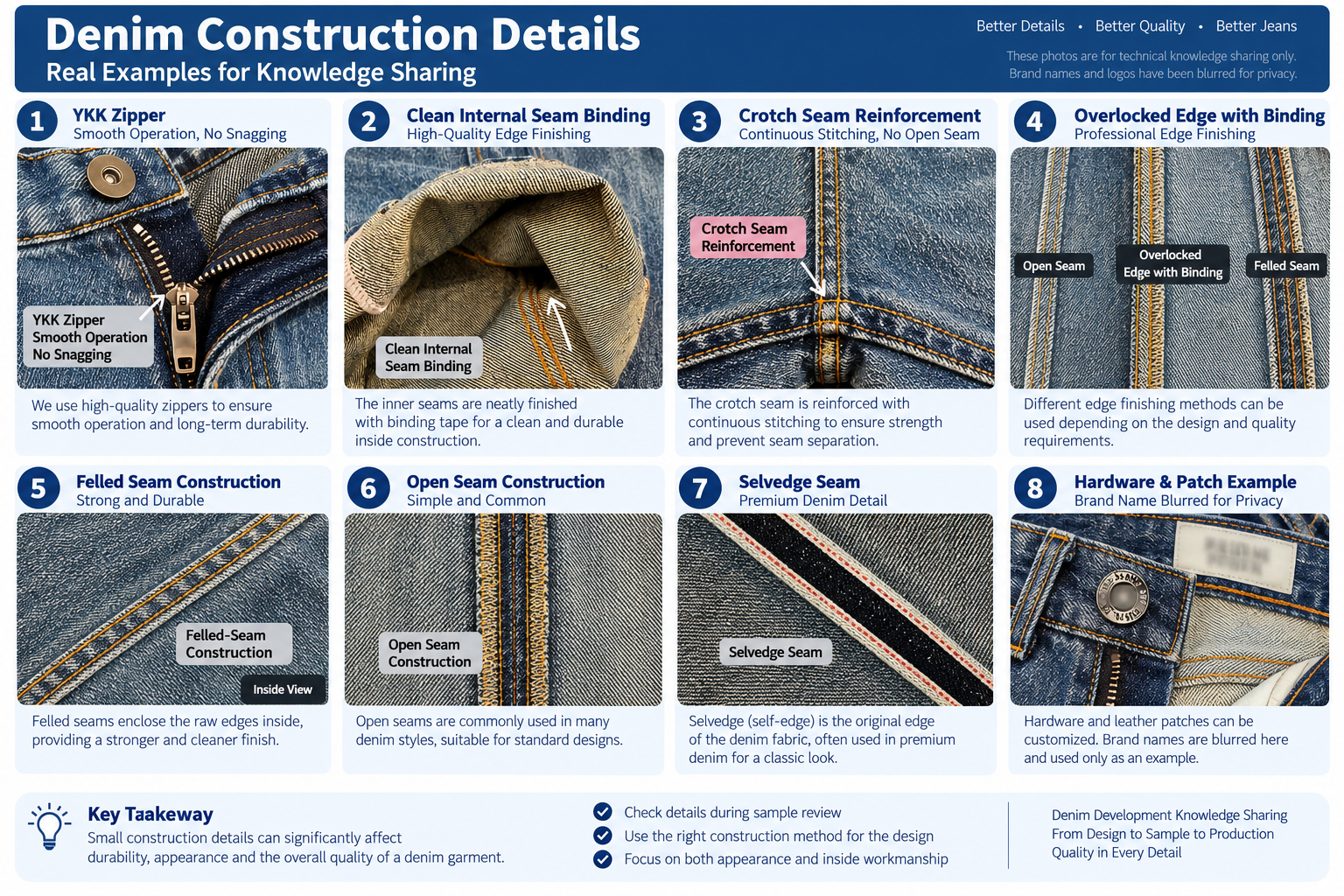
These examples are used for technical knowledge sharing. Exact construction methods and pattern relationships depend on the approved design, fit and specification; they should not be treated as fixed rules for every jeans style.
What should a brand check during sample review?
- Pattern and proportion: do the cut components produce the intended silhouette and balance?
- Pocket position and shape: are placement, angle and symmetry aligned with the approved design?
- Seam construction: are seam types and stitch details consistent with the specification?
- Reinforcement: are stress points secured where required?
- Edge and hem finish: are raw edges, hems and visible construction details clean and consistent?
Why this matters before bulk production
Construction evidence is useful because it makes the development process visible. A buyer can connect the approved design to the actual operations used to build the garment, then identify which details need correction before the next sample or before bulk production.
For fit and approval checkpoints, see Fit Sample and Size Set Approval. For wash-specific evidence, see Real Denim Wash Development Examples. For projects that are still being defined, see Custom Denim Development and How to Prepare a Denim Tech Pack. For the broader production and quality-review context, see Factory & Quality.