

PRIVATE-LABEL DENIM DETAILS
Custom Denim Trims, Buttons, Rivets and Labels
Trim problems rarely start with a missing logo. They start when the right artwork is applied to the wrong size, finish or placement.
We review this on the garment because the drawing cannot show how the parts behave together after sewing, washing and wear. The first sample should expose the decision that is still open, not simply repeat the reference image.
Denim trims and branding technical decision reference
Use this snapshot to keep hardware, labels and other brand details tied to the actual garment, wash and approved artwork. Exact materials and dimensions should come from the project specification rather than a generic trim list.
| Trim area | What the brand should define | Approval checkpoint |
|---|---|---|
| Buttons and rivets | Material, finish, size, logo or artwork, colour and placement | Physical trim sample and garment sample |
| Zippers | Type, tape colour, teeth finish, puller, length and application | Function and appearance on sample |
| Labels | Main label, size label, care label, material, dimensions and artwork | Artwork proof and sewn sample |
| Waistband patch | Material, colour, dimensions, artwork and position | Patch sample and post-wash appearance |
| Decoration | Embroidery, applique, laser, print or other detail with artwork and placement | Placement, scale and finished effect on sample |
| Wash compatibility | Which trims are exposed to the intended wash or finishing process | Colour, finish, attachment and appearance after wash |
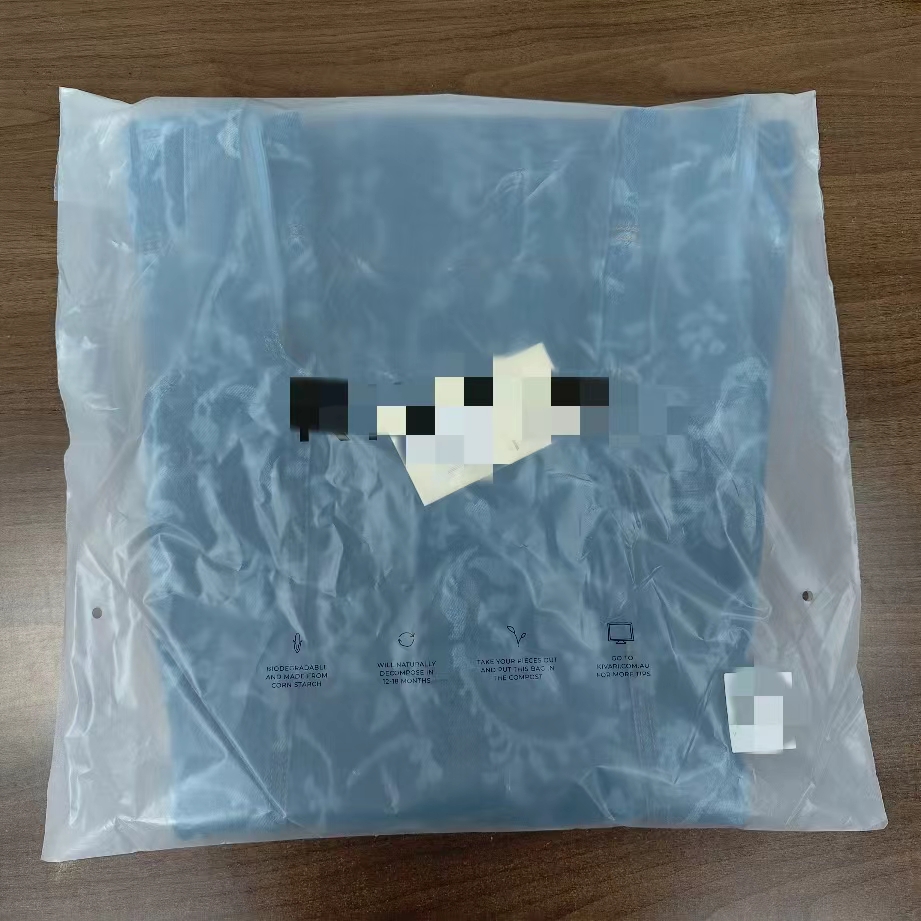
| Packaging | Hangtag, sticker, polybag or other approved packing details | Final packing sample or specification |
| BOM and revision | Current trim code, supplier reference, artwork version and approval status | Pre-bulk BOM check |
Set one approved reference for every trim
For jeans, jackets, shirts, shorts, skirts or another denim item, the trim brief should distinguish final requirements from details that are still under review. The next decision depends on the garment construction, wash direction, artwork, attachment method and available sourcing options.
Record any pending trim detail in the current tech pack before treating a sample component as final. Browse TANTYDENIM鈥檚 denim product categories when confirming the product category for the brief.
List the parts that must arrive with the garment
A denim trim sheet should identify every branded, functional and decorative component used in the garment. Each component should have a clear name or reference number so that it can be matched with the latest tech pack and approved sample.
Common denim trims include:
- Waistband buttons and tack buttons
- Pocket rivets and decorative rivets
- Metal or nylon zippers
- Main brand labels
- Size labels and care labels
- Leather or alternative waistband patches
- Hangtags and string attachments
- Embroidery, badges and appliqu茅 details
- Drawcords, eyelets, snaps or buckles
- Packaging, stickers and carton markings
The trim sheet should also state whether each item is custom-developed, selected from an available option or temporarily substituted for sampling.
A button needs more than a logo file
A custom jean button normally requires decisions about size, shape, material, finish, logo treatment and attachment. The button should also be suitable for the waistband construction and intended appearance of the garment.
The brief should identify:
- Required button diameter
- Flat, domed or shaped profile
- Metal colour and surface finish
- Engraved, embossed or printed artwork
- Logo orientation
- Front and back reference images
- Required position on the garment
Artwork should be supplied as a clean vector file where possible. A small screenshot may communicate the general idea, but it may not provide enough detail for accurate tooling or engraving.
The approved sample should confirm both the appearance and practical attachment of the button. Button placement should be checked together with the buttonhole, fly, waistband thickness and finished waist measurement.
Match the rivet face, back and setting method
Rivets may be functional, decorative or both. Their size, finish and placement should be coordinated with the button and other visible metal components.
The tech pack should identify the number and position of the rivets, including whether they appear on the front pockets, coin pocket, back pockets or another part of the garment.
Custom logo rivets require approved artwork and dimensions. The selected design should be reviewed on the physical garment because perceived size and prominence may differ from the artwork preview.
Specify the zipper inside the fly construction
The zipper specification should include the intended type, length, tape colour, teeth finish, slider appearance and puller direction. The zipper should work with the fly construction, fabric weight, wash process and garment size.
If a branded zipper puller is required, provide the artwork, dimensions and desired finish. When a standard zipper is acceptable, record the preferred colour and performance direction.
The sample review should check that the zipper opens and closes correctly, sits smoothly inside the fly and does not create unwanted distortion in the front rise.
Treat label artwork and label placement separately
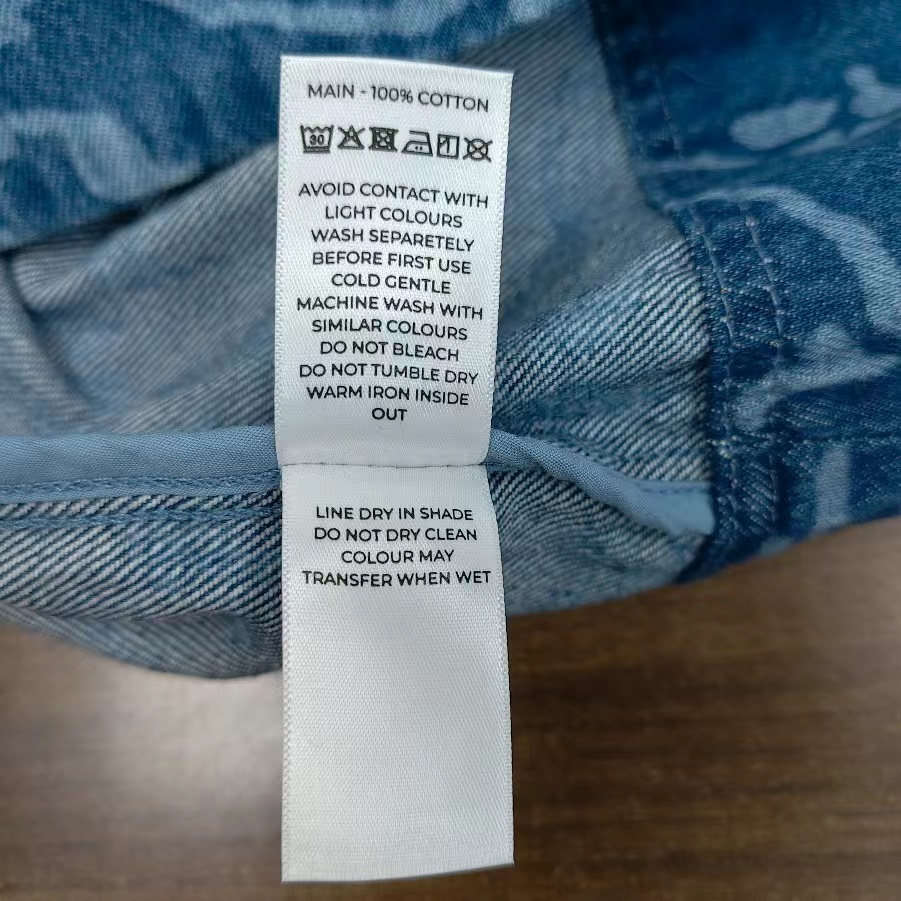
A label brief should identify the label type, dimensions, material, colours, fold method, artwork and placement. It should also distinguish between visible branding labels and information labels.
Common label details include:
- Main brand label artwork
- Finished label dimensions
- Centre fold, end fold or flat construction
- Background and artwork colours
- Stitching position
- Size-label position
- Care-label wording and order
- Country or market-specific information supplied by the brand
The brand is responsible for confirming that required fibre, care, origin and market information is accurate for the finished product and intended destination.
Real label and packing details to review on the physical garment
A trim brief becomes easier to check when the artwork and placement can be compared with the real sewn or packed result. The examples below show a care label and a packed denim garment; brand-identifying details are obscured. They are development references, not a customer case.
Size and position matter as much as patch material
A back-waistband patch may use leather or another selected material. The specification should describe the material direction, colour, thickness, dimensions, corner shape, artwork, surface treatment, stitching and placement.
The patch should be reviewed together with the denim wash because finishing can affect the surrounding fabric and the appearance of the patch.
If the patch is attached after washing, that production sequence should be clearly recorded.
Mark decoration on the correct pattern piece
Embroidery, badges, lace, appliqu茅 and other decorative elements should be shown on a technical drawing with dimensions and placement measurements.
Important development information may include:
- Finished artwork size
- Distance from seams or garment edges
- Thread or material colour
- Front, side or back placement
- Attachment method
- Required backing or reinforcement
- Whether the detail is applied before or after washing
Special waistband projects can also review our custom lace-waist jeans development guide .
Put trims through the intended wash
The selected wash can affect the colour, contrast and appearance of the complete garment. Metal finishes, labels, patches, embroidery and stitching should therefore be reviewed against the intended washed denim rather than only as separate components.
A trim that looks appropriate beside an unwashed fabric may appear too bright, too dark or visually inconsistent after finishing.
The approved wash sample should show the intended relationship between the denim, stitching, hardware and branding details.
Review our denim wash development and approval guide when preparing the wash section of the brief.
A clean plated sample may change after washing
Metal trims can respond differently to garment washing, abrasion and finishing. A brushed, matte, antique or plated surface may change appearance after processing.
Buttons, rivets and zipper hardware should therefore be reviewed against the intended wash process and finished garment rather than only as loose components.
If the plating, coating, base material or wash process changes after approval, another trim review may be needed before bulk production.
Trim suppliers may set a different minimum
Yes. The garment MOQ and trim supplier MOQ are not always the same.
Custom buttons, rivets, zipper pullers, woven labels, patches or specially coloured trims may have supplier minimums that are higher than the quantity needed for an initial 30–50 pcs garment order.
If a custom trim is not practical for the first production quantity, a suitable stock or semi-custom alternative can be reviewed for sampling or initial production.
Keep a physical trim standard with the released file
Every production trim should be compared with the approved sample or signed trim reference. The approval record should identify the latest version and explain any permitted substitute or variation.
Before bulk production, confirm:
- Button, rivet and zipper appearance
- Logo artwork and orientation
- Metal plating, finish and colour
- Label and patch colours
- Dimensions and placement
- Attachment and stitching details
- Care-label and size-label information
- Hangtag and packaging requirements
- Wash compatibility
- Consistency with the approved garment sample
If a trim changes after fit or wash approval, the effect on construction and appearance should be reviewed before it is adopted.
You can also review our denim production and quality review process before bulk approval.
Record each trim so another person can identify it
The trim page should form part of the latest controlled tech pack. Add photographs or drawings, reference numbers, material descriptions, dimensions, colours, artwork filenames and placement instructions.
Clearly mark which trims are approved, pending or used only as temporary sampling substitutes. This prevents a preliminary component from being mistaken for the final production specification.
For a complete product checklist, see how to prepare a denim tech pack .
Buyer FAQ: Custom Denim Trims
Can TANTYDENIM develop custom-branded buttons and rivets?
Yes. Custom-branded hardware can be reviewed as part of the denim project. The brand should provide usable artwork, dimensions, finish direction and expected quantity.
Can labels, patches and packaging be customised?
Yes. Private-label development can include brand labels, size and care labels, waistband patches, hangtags and packaging. The final specification should align with the confirmed product and target market.
Can temporary trims be used for the first sample?
Yes. Temporary trims may be used when the final custom component is not yet ready, provided the substitution is clearly identified. Final production trims still need to be reviewed and approved.
Should trims be approved before or after washing?
The appropriate review depends on the trim and production sequence. Visible components should be evaluated with the intended finished garment so that colour, placement, attachment and overall appearance can be confirmed.
Can trim MOQ be higher than the garment MOQ?
Yes. Some custom hardware, labels, patches and other trims can have supplier minimums that are higher than the garment production quantity. Suitable alternatives can be reviewed when necessary.
When should a trim be re-approved?
Another trim review may be needed when the material, plating, finish, dimensions, attachment method or wash process changes materially after the original approval.
What is TANTYDENIM’s MOQ?
Standard MOQ is 50 pcs per style and colour. Trial orders from 30 pcs per style and colour may be reviewed subject to fabric availability, wash, trims, construction and size breakdown. Mixed sizes are available; the final workable quantity is confirmed for the project. Custom trim feasibility depends on artwork, material, finish, dimensions, sourcing requirements and project quantity.
How long does sampling take?
Sampling timing depends on product complexity, material availability, wash requirements and revision rounds; the schedule is confirmed after the relevant specifications, fabric, trims and sample requirements are confirmed.
Real production-partner evidence: attaching denim hardware
What you are seeing: a tack button / denim hardware component being set on a garment at a production partner.
Why it matters: hardware is not fully approved as a loose component; placement, setting, backing and post-wash appearance all affect the finished garment.
What should be approved: finish, size, logo or artwork, position, attachment and wash compatibility on the physical garment.
TANTYDENIM’s role: we coordinate the approved hardware specification and garment application with the relevant production partner.
Buttons and rivets should be checked as part of the finished garment, not only as loose components. Attachment position, finish, backing and how the hardware looks after the intended wash all matter to the approval.
This footage documents work at a production partner used in the development/production network. It does not imply that TANTYDENIM owns the facility.
Develop your custom denim trims and branding
Send your tech pack, artwork or reference images together with the required button, rivet, zipper, label, patch, embroidery and packaging details. Include the intended garment, wash direction, quantity, size range and required timeline.
Brands starting a complete denim project can also review our custom denim development and sampling process or OEM, ODM and private-label denim development services .