

How to Review a Denim Sample Before Bulk Production: Fit, Wash, Construction and Trims
Before bulk denim production, a brand should not approve a sample on appearance alone. The useful approval standard combines fit, finished measurements, wash direction, construction details, trims and a clearly identified physical sample version.
Pre-bulk denim sample approval reference
Use this snapshot to keep the approved physical sample, written specification and open comments aligned before bulk production. The exact checkpoints depend on the style, but unresolved changes should remain visible rather than being treated as approved by default.
| Approval area | What to compare | Approval evidence |
|---|---|---|
| Fit | Silhouette, wearing position, balance, comfort and key fit comments | Approved fit sample and recorded comments |
| Measurements | Key POMs, finished-garment condition and applicable tolerances | Latest measurement specification and checked sample |
| Grading / size set | How the approved base fit translates into selected smaller and larger sizes | Size-set review where required |
| Wash | Shade, contrast, fading placement, handfeel, shrinkage effect and surface appearance | Approved physical wash sample |
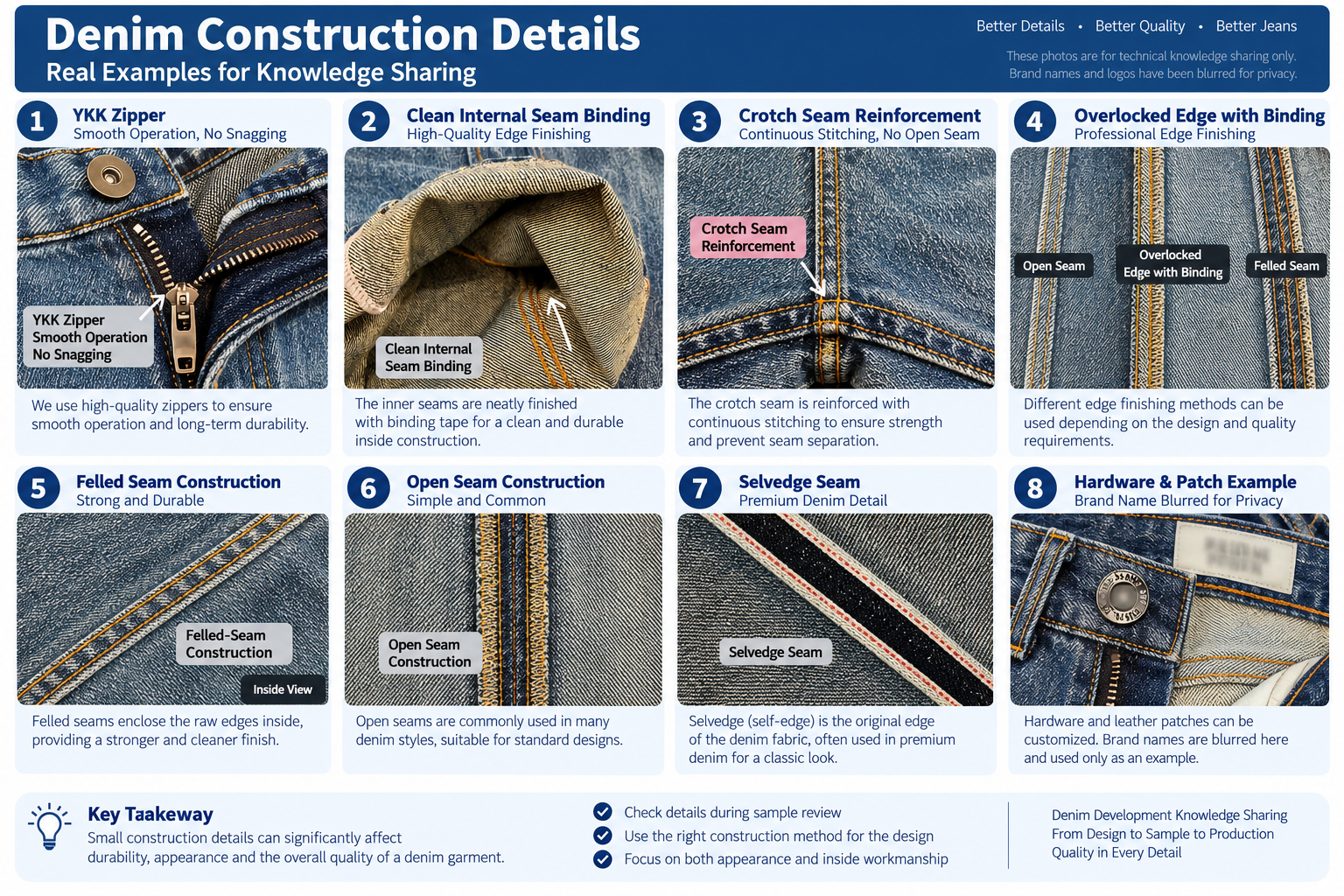
| Construction | Seams, stitching, pockets, waistband, fly, reinforcement and visible assembly details | Sample review against the current tech pack |
| Trims and branding | Hardware, labels, patches, decoration, artwork and placement | Approved trim samples and garment placement |
| Revision status | Which comments were implemented and which remain open | Current version number, revision date and approval notes |
| Open exceptions | Any item still pending, substituted or intentionally deferred | Written exception or pending-status record before bulk release |
1. Fit sample: confirm the base garment before grading
A fit sample is used to review the base size, silhouette, balance and measurable fit points before the size range is graded. For jeans, the review should consider the waistband, rise, hip, thigh, knee, inseam, leg opening, side seam, crotch shape and pocket placement together.
A measurement can be within tolerance while the garment still shows a balance or proportion problem. That is why physical fitting and measurement review should be used together.
For the detailed workflow, see Denim Fit Sample and Size-Set Approval.
2. Size set: check whether grading works across selected sizes
After the base fit is sufficiently stable, a size set can be used to review representative smaller and larger sizes. The purpose is not simply to repeat the base sample. It is to check whether the grading keeps the intended waist, hip, rise, leg shape, pocket position and overall proportion consistent across the size range.
3. Wash approval: approve a physical result, not only a wash name
Terms such as enzyme wash, stone wash, laser effect or vintage wash describe a direction, not a complete production standard. The physical wash sample should make the intended shade, fading placement, whisker contrast, abrasion, handfeel and finished measurements clear.
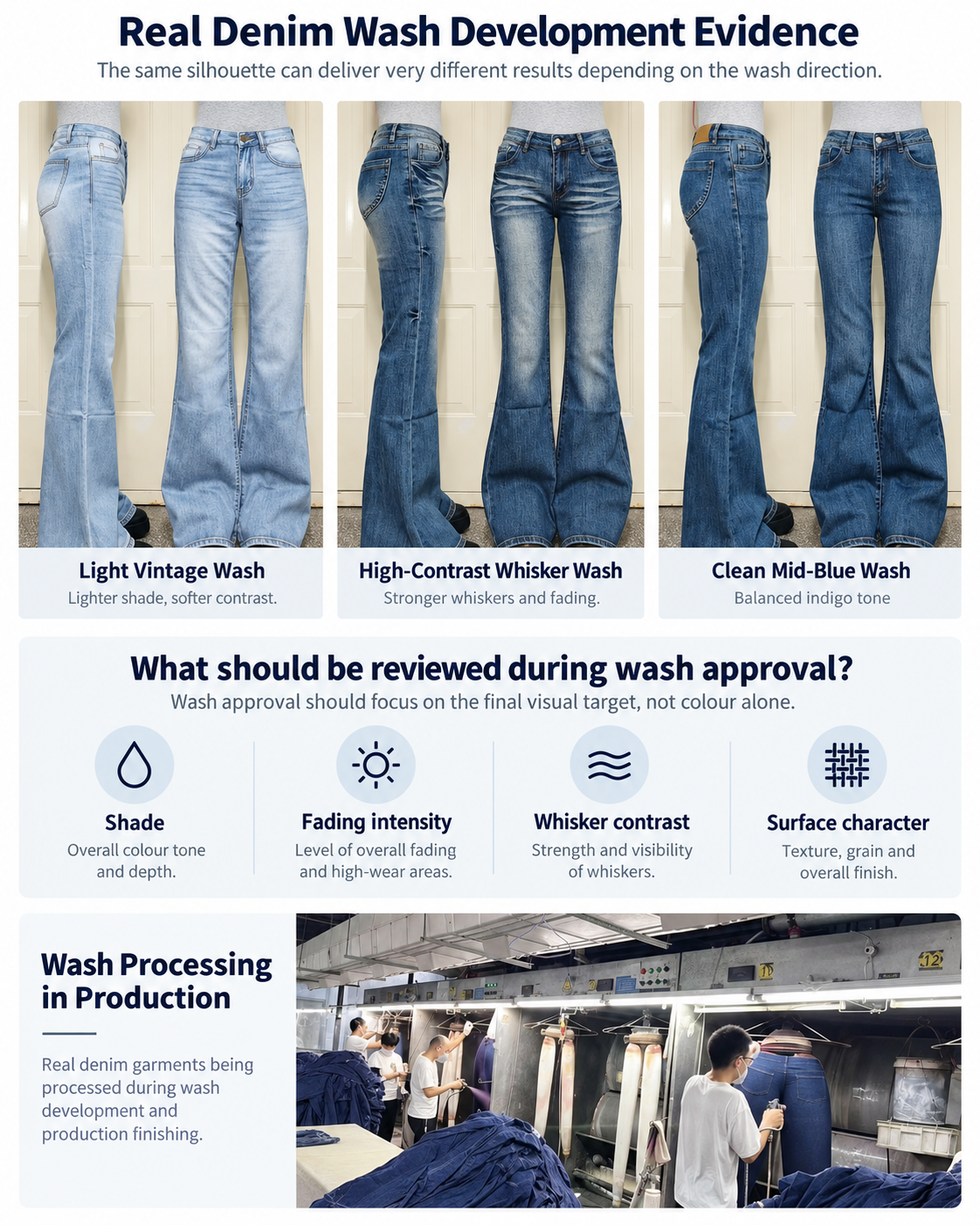
For real wash-development evidence, see How Denim Wash Direction Changes the Final Look and the full Denim Wash Guide.
4. Construction: connect the approved design to the real sewing sequence
Pattern preparation, cutting, pocket construction, waistband assembly, seam reinforcement, bartacking, overlocking, buttonholes, hems and finishing are separate operations. A sample review should confirm that these details match the approved specification rather than assuming the outside appearance is enough.
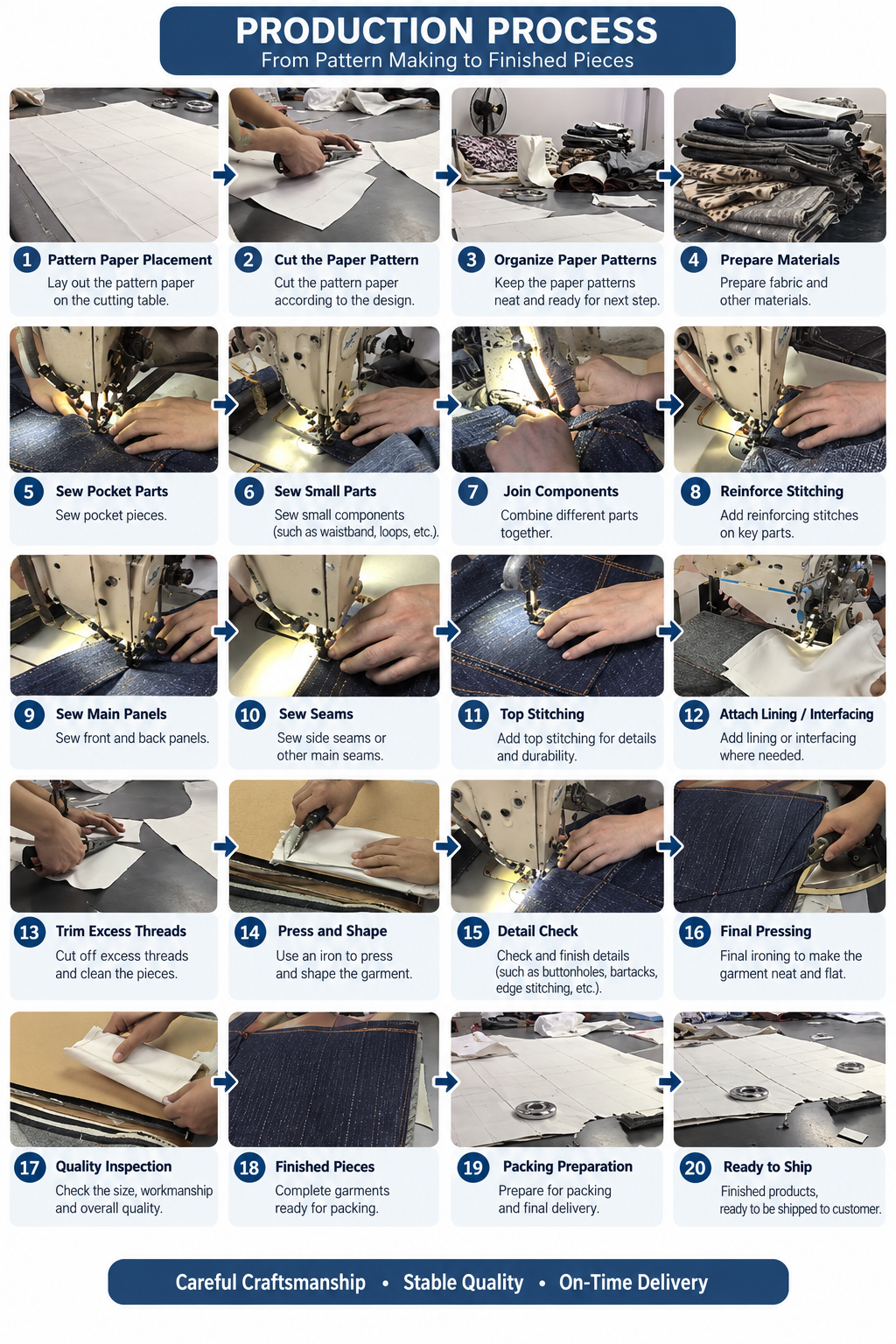
See From Paper Pattern to Sewing: Real Garment Production Process Evidence.
5. Trims and decoration: approve what the finished garment actually uses
Buttons, rivets, zippers, labels, patches, embroidery, appliques and woven trims should be reviewed on the intended garment and wash. Their material, finish, dimensions, placement and attachment method should be recorded in the latest technical specification.
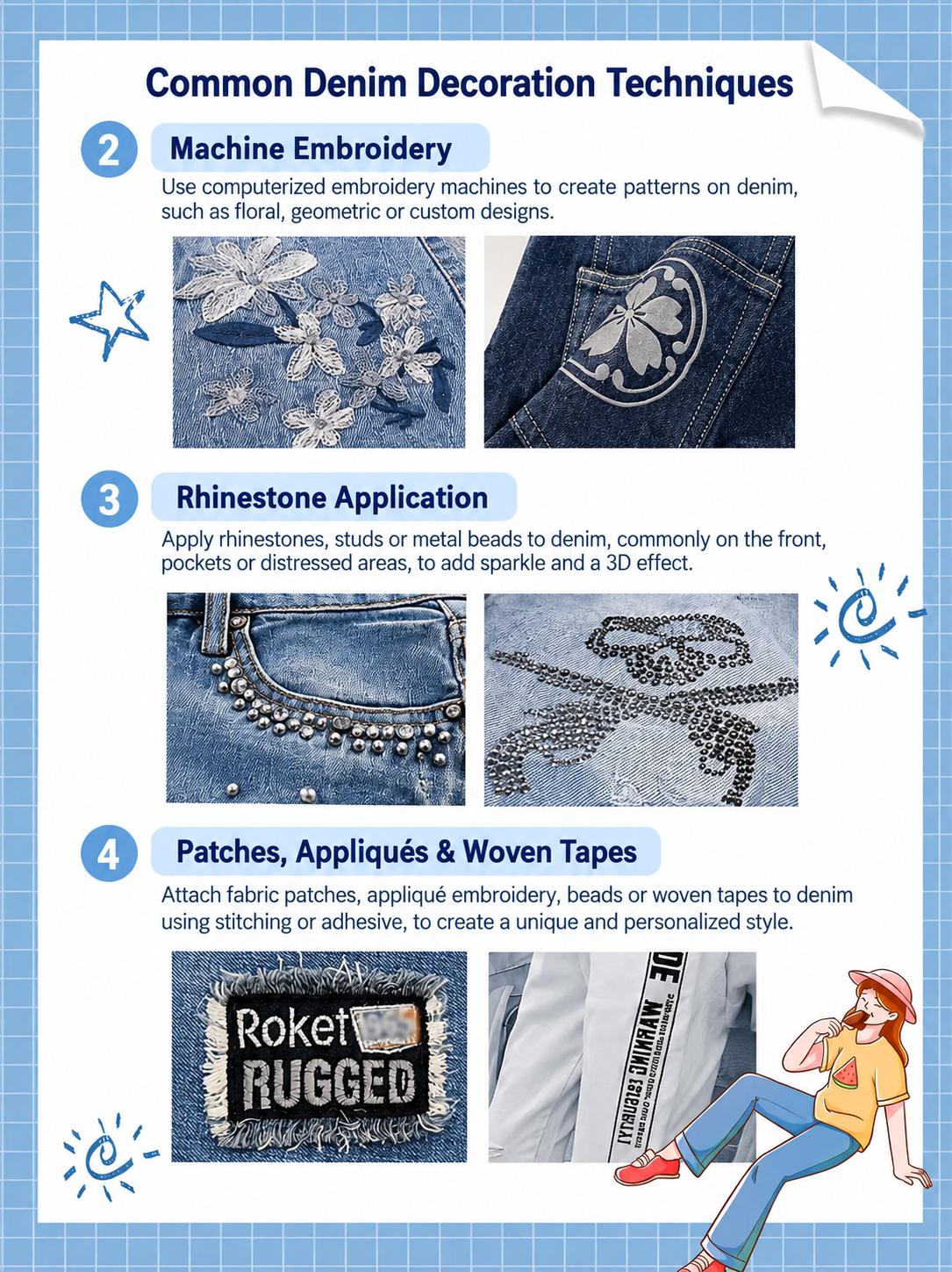
For decoration examples, see Denim Embellishment Techniques. For hardware and private-label components, see Custom Denim Trims, Buttons, Rivets and Labels.
6. Final quality review before bulk production
Final review should compare the finished garment with the approved sample and written specification. Check measurements, visible construction, trim attachment, wash appearance and any remaining exceptions before the project moves forward.
This footage is presented as production-partner process evidence. It does not imply an owned factory, customer endorsement, production capacity or a universal inspection standard.
7. Final approval record before bulk production
The approval record should identify the sample version, size, fabric, wash, finished measurements, fit comments, construction, trims and any remaining exceptions. The physical approved sample should be retained as the practical comparison reference for later samples and bulk production.
Brands can start a project with a tech pack, sketch, reference images or an existing garment. TANTYDENIM starts from 30 pcs per style, with mixed sizes available; colour splits and final workable quantity are reviewed before confirmation. See custom jeans manufacturer sourcing and denim development for the broader development route.